Crypto: A Massive Warning to Holders About Regulation and Platform Risk
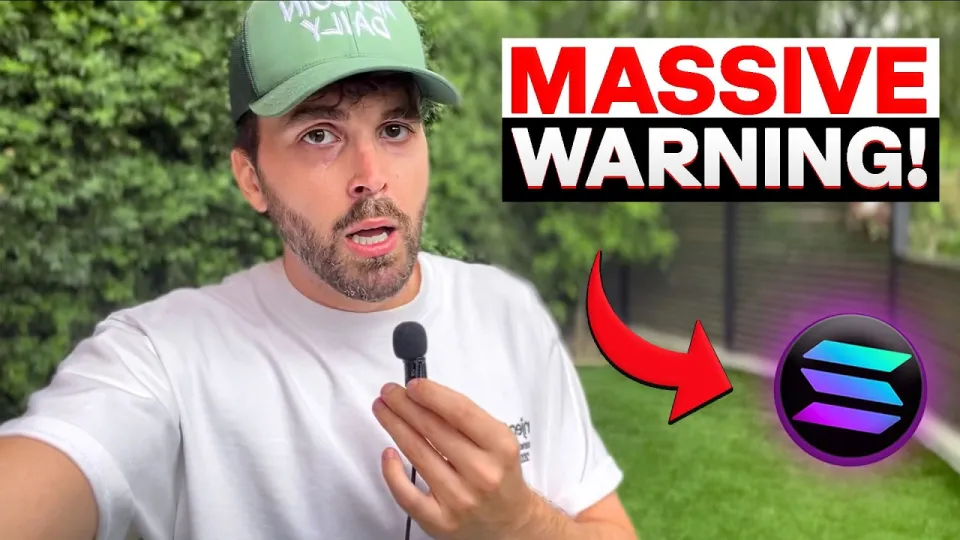
Video: My MASSIVE Warning To Crypto Holders
You can order the same kind of articles for your own video to boost it on YouTube and Google. Just message the Telegram bot @sat_sit_bot. Articles with your video embedded are written and posted by the bot itself — on popular topical sites (no ads). Try it free: 50 articles on us.
· based on the channel Altcoin Daily
Key takeaways
- The core warning: holding crypto on exchanges or brokerage-style apps exposes holders to counterparty and regulatory risk, not just price risk.
- Self-custody in a hardware wallet removes exchange counterparty risk; coins left on a platform are an IOU, not ownership of keys.
- Regulatory pressure targets intermediaries (exchanges, brokers, stablecoin issuers), not the underlying Bitcoin or Ethereum networks.
- Assets with no dependence on a single company's compliance posture — BTC, ETH, SOL, ADA, ZEC — are the ones holders tend to favor in a regulatory squeeze.
- The video's sponsors are Weex (a $500 deposit bonus) and Bitunix (a $10k bonus promoted as no-KYC); both are affiliate promotions, not endorsements of safety.
The warning to crypto holders is simple: the biggest danger is not a price crash but where your coins sit. If your crypto is on an exchange or a brokerage-style app, you own an account balance, not keys — and that balance depends on a company's compliance, liquidity and solvency. Altcoin Daily's breakdown lays out why holders should treat custody and platform choice as seriously as entry price, and you can see the promotional offer tied to the video through the Weex welcome bonus registration page.
What the crypto warning to holders actually says
The message is about counterparty risk, not about predicting the next candle. A holder who keeps coins on a platform is exposed to three things at once: the platform's business decisions, its regulator's decisions, and its ability to process withdrawals under stress. None of those are visible on a price chart.
The practical translation is straightforward:
- Coins on an exchange are an IOU. The exchange holds the keys; you hold a promise.
- Regulatory action usually hits the intermediary first — a broker, an exchange, a stablecoin issuer — not the Bitcoin or Ethereum network itself.
- A platform that restricts withdrawals, delists assets or changes lending terms can do so without your consent.
- Self-custody moves the risk from a company's balance sheet to your own key management, which is a risk you can actually control.
The video frames this as a warning rather than a forecast, which is the right framing: it does not depend on whether the market goes up or down next quarter.
Why regulation is the pressure point, not the asset
Regulation targets the chokepoints where fiat meets crypto, and those chokepoints are companies. Exchanges, custodians, brokers and stablecoin issuers are the entities that receive licenses, face enforcement and get asked to freeze or report activity. The underlying networks keep producing blocks regardless.
That distinction matters for holders because it splits the market into two groups. Assets that depend on a single company's compliance posture carry an extra layer of risk; assets that do not depend on any one intermediary's license are more resilient to a regulatory squeeze. This is exactly the logic behind the view that holders should favor coins that do not care about regulation — Bitcoin, Ethereum, Solana, Cardano and Zcash are the names that come up most often in that discussion.
The corollary is less comfortable: a token whose value depends on a platform's lending product, yield program or listing status is exposed to decisions made in a boardroom, not on-chain.
Typical questions from holders about platforms and self-custody
Holders keep asking the same few things, and they deserve direct answers rather than slogans. The recurring themes are which platforms are acceptable, whether brokerage apps count as custody, and whether holding a token is the same as using a protocol.
- Brokerage apps versus exchanges. A brokerage-style app that sells crypto is still a custodian. The interface feels like a wallet, but the keys and the legal claim sit with the company.
- Lending and yield products. Earning yield on a platform means lending your coins to that platform's counterparties. The yield is compensation for that credit risk.
- Token versus protocol. Holding a governance token of a lending protocol is not the same as depositing into it. The token is a market asset; the deposit is a claim on a pool.
- Withdrawal testing. A useful habit is to test a small withdrawal before relying on a platform for size, so you learn its real processing behavior rather than its advertised one.
The honest answer to "which platform is safe" is that no platform is risk-free; the question is how much counterparty risk you are willing to accept and for how long.
How to reduce custody risk in practice
Custody risk falls when you separate long-term holdings from trading balances. Most holders do not need every coin on an exchange at all times, and the split is easy to define.
- Decide a working balance — the amount you are willing to leave on a platform for active trading.
- Move the rest to a hardware wallet and verify the receive address on the device screen, not on your monitor.
- Back up the seed phrase offline, in more than one physical location, and never in a photo, cloud note or password manager.
- Keep a written record of which assets sit where, so a platform outage does not turn into a blind spot.
- Re-check withdrawal limits and KYC status on any platform you use before you need to move size quickly.
A hardware wallet does not protect against your own mistakes — a lost seed phrase is unrecoverable — but it removes the scenario where a company's decisions determine whether you can access your own assets.
The counterpoint worth stating plainly: staying entirely out of crypto is also a risk, and many holders argue the bigger danger is not owning any. That is a portfolio decision, not a custody one, and the two should not be confused.
The promotional links in the video and what they are
The breakdown includes two affiliate promotions, and holders should treat them as marketing rather than safety guarantees. Both offers are tied to registering a new account with a specific code.
- Weex welcome event: unlock the $500 deposit bonus on Weex — a deposit-based promotional event for new users.
- Bitunix registration: register on Bitunix with the Altcoin Daily code — promoted as a $10k bonus with no KYC.
Two things follow from this. First, a bonus is not yield and not a return; it is a marketing incentive with conditions attached, usually deposit thresholds and trading volume. Second, a no-KYC pitch is a convenience claim, not a risk reduction — the counterparty risk of the platform itself does not change because onboarding is lighter. Anyone comparing platforms should read the terms of the promotion before depositing.
Conclusion
The warning to crypto holders comes down to one idea: price is the risk you can see, and custody is the risk you cannot. Regulation lands on intermediaries, so the coins most exposed are the ones tied to a single company's license, product or balance sheet, while self-custody puts the decision back in the holder's hands. Altcoin Daily's breakdown is a useful reminder that a hardware wallet and a deliberate split between trading balance and long-term holdings do more for most holders than any timing call. If you are going to use a platform anyway, start with the Weex welcome bonus page and read the terms before you deposit anything.
Source: My MASSIVE Warning To Crypto Holders · Markdown version
Questions & answers
Is the warning about crypto prices or about where I keep my coins?
It is about custody. The video's core point is that coins held on an exchange or brokerage app are an IOU backed by a company, not by keys you control. Price swings are visible and priced in; counterparty and regulatory risk are not, which is why they are the bigger blind spot for most holders.
Does buying crypto through a brokerage app count as self-custody?
No. A brokerage-style app is still a custodian: the company holds the keys and the legal claim, even if the interface looks like a wallet. Self-custody means the private keys sit with you, typically in a hardware wallet, and withdrawals are signed by you rather than approved by a platform.
Are tokens like BTC, ETH, SOL, ADA and ZEC really immune to regulation?
No asset is fully immune. The argument is relative: these networks do not depend on a single company's license or compliance posture to keep operating, while a token tied to a platform's lending product or listing status can be affected by a corporate or regulatory decision overnight.
Should I trust a no-KYC bonus offer from a video sponsor?
Treat it as marketing, not as a safety signal. A bonus usually comes with deposit thresholds and trading conditions, and lighter onboarding does not reduce the platform's counterparty risk. Read the promotion terms and test a small withdrawal before committing size.